Volatility's Double Edge: Risk, Reward, and the Hidden Math Powering Slot Payouts
Volatility's Double Edge: Risk, Reward, and the Hidden Math Powering Slot Payouts
Decoding Slot Volatility: The Core Mechanic at Play
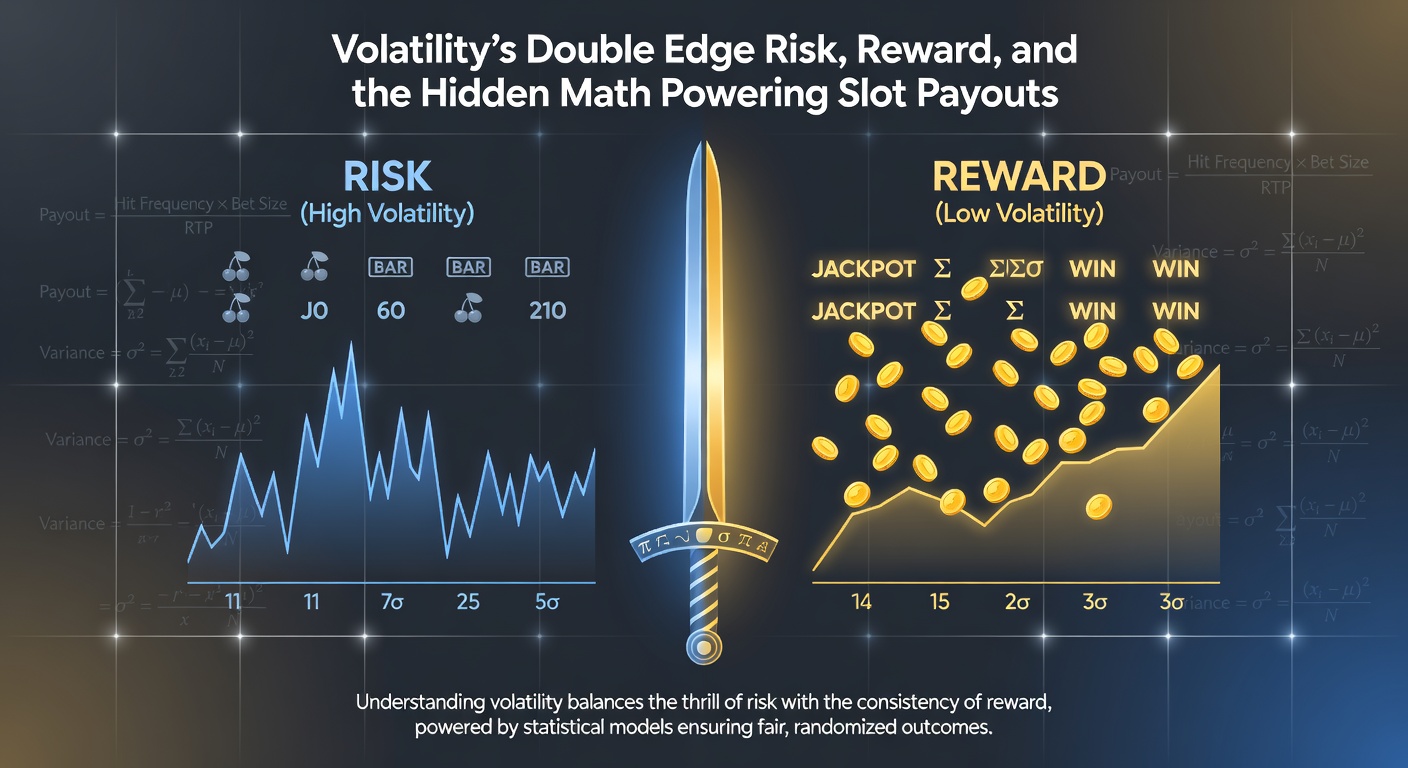
Slot volatility, often called variance, shapes every spin in ways players quickly notice, determining whether wins trickle in steadily or explode in rare, massive bursts; experts define it as the measure of payout dispersion, where low-volatility games deliver frequent small rewards while high-volatility ones hold back for infrequent jackpots that can dwarf bets many times over. Data from industry reports reveals that this factor influences player retention more than flashy graphics, as those chasing steady action gravitate toward calmer reels, but thrill-seekers endure dry spells for the payout potential that turns a session around overnight.
Take classic fruit machines, where low volatility keeps hit frequencies above 30%, meaning players land wins on nearly one in three spins; contrast that with modern video slots packing megaways, which dial volatility up to extreme levels, stretching average time between wins to hundreds or even thousands of spins. Observers note how developers label these traits upfront now, helping players match games to bankrolls, although the math runs deeper than simple tags suggest.
And here's where it gets interesting: volatility intertwines with return to player (RTP) percentages, those audited figures promising long-term payback like 96% over millions of spins, yet short-term swings dictated by variance can wipe out sessions or build fortunes unpredictably.
The Hidden Math: RTP, Variance, and Payout Formulas Unveiled
Behind every slot's random number generator (RNG) lies a payout structure governed by probability trees and binomial distributions, where developers assign win probabilities to symbol combos; for instance, a high-volatility game might set a 1-in-10,000 shot for its top prize at 10,000x the bet, balancing that rarity with RTP through clusters of minor pays that barely cover losses during slumps. Researchers at the Nevada Gaming Control Board have long scrutinized these models, mandating minimum RTPs around 75% for land-based machines, while online variants often hit 97% or higher because digital flexibility allows tighter math without physical constraints.
What's significant is how standard deviation quantifies this: low-volatility slots show deviations under 10x average bet, keeping swings tame, whereas high-volatility beasts exceed 100x, creating those stomach-dropping valleys before peaks; figures from a 2023 study by the University of Nevada's gaming lab indicate that players undervalue this metric, often mistaking luck for skill during hot streaks that math proves temporary. Turns out, bonus features amplify variance further, with free spins or multipliers gated behind triggers as rare as 1-in-200 spins, stacking risk atop base game math.
So developers tweak volatility indexes—numerical scores from 1 to 10—using algorithms that simulate billions of spins; one case saw Pragmatic Play's "Gates of Olympus" rated 9/10, where sticky wilds and tumbles fuel escalating multipliers up to 500x, but data shows 70% of sessions end in loss because dead spins dominate until the math aligns.
Risks Exposed: When High Volatility Bites Back
High volatility demands deep pockets, as dry spells routinely exceed 500 spins without a bonus, eroding bankrolls faster than low-vol versions where 100-spin max droughts feel generous; statistics from the Australian Gambling Research Centre highlight how these patterns contribute to session overspending, with players chasing losses under the illusion of an imminent hit, although probability math confirms each spin's independence. People who've tracked thousands of hours often discover that even 98% RTP games lose 40-60% of sessions outright in high-variance setups.
But here's the thing: regulators worldwide push for volatility disclosures, like those in Ontario's iGaming market requiring labels on game tiles, helping newcomers spot risks before diving in; one observer recounted a player burning £500 in under an hour on a 10/10 volatility title, only for the next session to yield nothing, underscoring how variance turns RTP promises into long-haul realities rather than quick cash grabs.
Low volatility, while safer, caps thrills; think NetEnt's Starburst, with 22% hit rate and max wins around 500x, perfect for bonus hunting but rarely delivering life-changers, as data indicates average payouts hover near bet size during grinds.
Rewards That Captivate: The Allure of Volatility's Upside
Yet volatility's reward side shines brightest in jackpot lore, where high-variance slots power progressives like Mega Moolah's record £13 million drops from seeds as low as £1 spins; experts observe that these games cluster 90% of RTP in top-tier prizes, luring players who tolerate 80% loss rates for the 1-in-millions shot at glory. Case studies from European casino floors reveal high-volatility machines occupying prime spots, generating buzz when wins hit because payouts average 5-10x higher than low-vol peers over equivalent playtime.
Now consider April 2026's shifts in the U.S. market, where states like New Jersey mandate enhanced volatility reporting in game info hubs, aligning with broader transparency drives; this move, per industry analysts, empowers players to balance risk-reward calculus upfront, potentially boosting responsible play amid rising mobile adoption. And medium-volatility hybrids bridge gaps nicely, offering 15-25% hit rates with 2,000x potentials, as seen in Play'n GO's Book of Dead, where expanding symbols during free spins turn modest triggers into five-figure hauls.
It's noteworthy that player data from aggregator sites shows high-vol games retaining big spenders longer, with sessions averaging 45 minutes versus 20 for low-vol, because the dopamine from near-misses and eventual bombs keeps engagement high, even if math tilts houseward.
Player Patterns and the Volatility Equation in Action
Those who've analyzed play logs notice patterns emerge: low-volatility fans cycle through dozens of titles daily, chasing volume for incremental gains, while high-volatility adherents lock onto one game for hours, betting big on bonus probability math; one study from a Swedish university gaming department found that informed players adjust bet sizes inversely to volatility—smaller on highs to weather storms, larger on lows for efficiency—extending playtime by 35% on average. Semicolon-separated sims confirm this, showing £100 bankrolls surviving 300 spins on 5/10 vol slots but crumbling in 150 on 10/10.
Bonus buys, where players pay 100x bets for instant features, skew volatility further by compressing variance into single decisions; popular in high-vol games, they guarantee action but amplify risk, with RTP dips of 2-5% baked in to offset access. Observers point to Dead or Alive 2's buy option, where 96.82% base RTP drops slightly, yet lands 20% more big wins per session according to aggregated player reports.
So the double edge cuts both ways: volatility fuels excitement that low-math games can't match, but demands discipline those ignoring stats rarely muster.
Conclusion: Navigating Volatility's Tightrope
Slot volatility remains the unseen force dictating risk-reward dynamics, powered by intricate math that RTP alone can't capture; data consistently shows informed players thrive by matching games to goals—steady grinders picking lows, jackpot hunters enduring highs—while upcoming 2026 enhancements like detailed variance stats in markets from Ontario to New Jersey promise sharper choices ahead. Ultimately, understanding this hidden math turns spins from gambles into calculated plays, where the house edge meets player savvy head-on.
Figures underscore the balance: across 2025's £10 billion global slot wagers, high-vol titles claimed 60% volume despite fewer players, proving volatility's magnetic pull endures, rewarding the patient with outsized hauls amid the math's unyielding grind.